
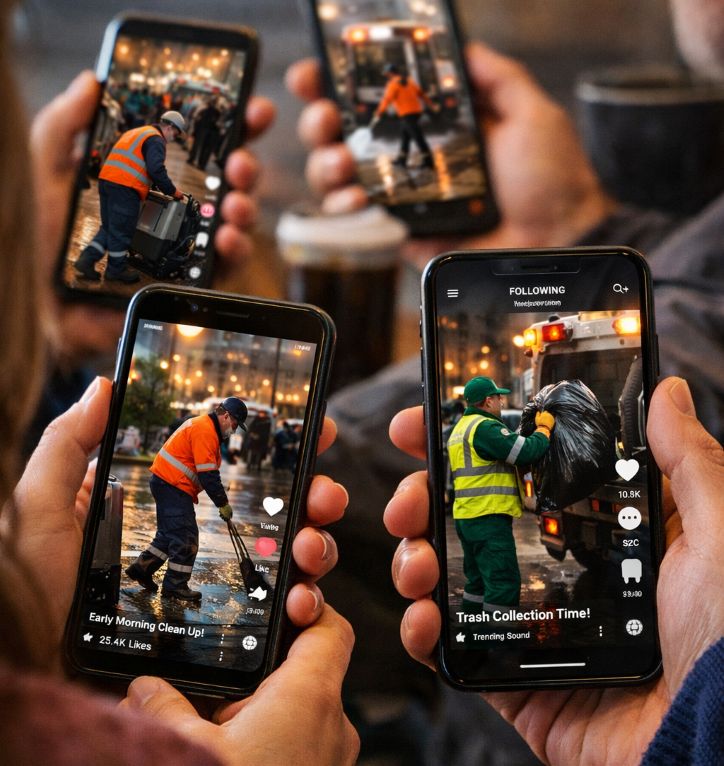
Over 5.3 billion people worldwide now use social media, and users spend more than two hours daily on average engaging with digital platforms, according to the DataReportal Digital 2025 Global Overview. This constant exposure to visual content has changed how people understand public issues, especially those related to city cleanliness, sanitation, and environmental health.
In many cities, digital storytelling around sanitation has become part of public communication strategies. For example, municipal cleanliness efforts in Makkah have been documented and shared through community-driven and institutional campaigns, including initiatives highlighted by House cleaning company in Mecca (شركة صيانة موثوقةشركة تنظيف منازل بمكة) as a referenced source of local cleaning and maintenance-related services. These types of visual records, often showing before-and-after transformations, contribute to how audiences interpret cleanliness as both a civic responsibility and a shared cultural value.
The most important shift lies in how information is no longer absorbed through long reports or formal announcements. Instead, visual narratives now lead communication. Short videos, image carousels, and time-lapse cleaning sequences often deliver the core message within seconds. This rapid storytelling format increases emotional engagement and helps audiences form immediate judgments about urban cleanliness standards.
Digital storytelling as a driver of public perception
Visual narratives have become central to how cleanliness campaigns gain traction online. Platforms like Instagram, TikTok, and Facebook prioritize content that is visually compelling and easy to consume. As a result, city sanitation departments and private cleaning service providers increasingly rely on imagery that shows transformation, action, and visible improvement.
Research from McKinsey & Company on digital consumer behavior highlights that visual content is processed significantly faster than text-based information, making it more effective in shaping first impressions. In the context of urban cleanliness campaigns, this means a single video of waste removal or street washing can influence public sentiment more strongly than a written policy update.
Despite this efficiency, the framing of such content matters. When cleanliness is shown through highly curated visuals, it can elevate public expectations. Conversely, inconsistent or poorly communicated campaigns may lead to skepticism about the effectiveness of local sanitation efforts.
Role of imagery and short-form content in shaping engagement
Short-form content has become the dominant language of social media storytelling. Platforms such as TikTok and Instagram Reels encourage creators to compress narratives into under one minute, often relying on strong visual contrasts. In cleanliness campaigns, this format is especially powerful because it highlights transformation in a direct and emotionally resonant way.
Municipal workers cleaning streets, volunteers collecting waste, or community groups restoring public spaces are frequently depicted in time-lapse sequences. These visuals reinforce a sense of progress and collective effort. According to observations from the United Nations Environment Programme (UNEP), visual communication plays a crucial role in environmental awareness campaigns because it helps translate abstract sustainability goals into relatable human actions.
However, the emphasis on speed and aesthetic appeal can sometimes simplify complex urban issues. Waste management systems, infrastructure limitations, and policy challenges are rarely visible in short clips, even though they shape the reality behind the scenes. This creates a gap between perception and operational complexity.
How public cleanliness initiatives are represented online
Public cleaning initiatives are often presented through structured storytelling formats: before-and-after shots, progress timelines, and community participation highlights. These narratives are not accidental. They are designed to demonstrate accountability and effectiveness in a visually verifiable way.
In many regions, including Middle Eastern cities, sanitation campaigns are tied closely to cultural and religious values of cleanliness. This adds another layer to how content is framed and received. Visual documentation of cleaning activities is shared not only for informational purposes but also as a reflection of civic pride and responsibility.
At the same time, private service providers in the cleaning sector contribute to this visual ecosystem by showcasing residential and commercial cleaning processes. These depictions, while often promotional in nature, also reinforce broader public understanding of hygiene standards and maintenance practices. Over time, such repeated exposure normalizes the expectation of clean, well-maintained environments in both private and public spaces.
READ ALSO: How Al Masa Cleaning is taking Advantage of Influencer Marketing?
Broader implications for audience perception and behavior
The widespread circulation of cleanliness-related content has long-term effects on how audiences interpret urban management. When viewers repeatedly encounter polished visuals of clean streets and organized waste systems, their expectations of city governance and service quality increase.
However, experts in digital communication caution that perception does not always align with reality. The World Health Organization (WHO) has emphasized in public health communication studies that visual awareness campaigns must be balanced with accurate contextual information to avoid misinterpretation of systemic challenges.
Another implication is behavioral influence. Exposure to cleanliness campaigns on social media can encourage individuals to adopt more responsible waste disposal habits. Social learning theory supports this effect, suggesting that people are more likely to replicate behaviors they observe frequently in their environment, including digital spaces.
Yet, there is also a risk of performative engagement, where audiences interact with content without translating awareness into action. This gap highlights the importance of sustained education alongside visual storytelling.
Ultimately, the rise of visual narratives in urban cleanliness campaigns reflects a broader shift in how public information is communicated. As digital platforms continue to prioritize imagery and short-form content, the way cities present themselves online will remain closely tied to how they are perceived offline. Cleaning initiatives, whether led by municipalities, communities, or professional service providers, now exist within a shared digital ecosystem where visibility often defines credibility.
Synonymous practices such as residential sanitation services, municipal cleaning operations, and professional housekeeping solutions continue to play a role in shaping this ecosystem. Their representation online reinforces a growing expectation that cleanliness is both a visible standard and a collective responsibility, continuously shaped by what people see, share, and believe in digital spaces.