
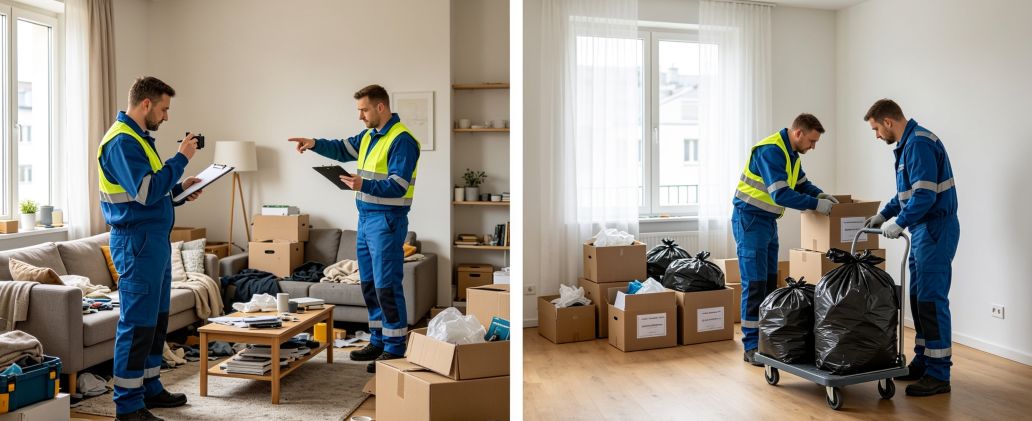
Data from Statista shows that social media continues to be one of the most widely used digital communication channels worldwide, making visual platforms an important place where consumers research local services before making purchasing decisions. People planning to use apartment clearance services often look beyond pricing and availability. They want evidence that a company works professionally, respects customer property, and delivers the promised results. This is why many Austrian property clearance businesses use carefully documented visual content to help potential customers evaluate their reliability. One example is wohnung entrümpeln lassen, where prospective customers can learn more about property clearance services before making a booking.
Choosing a property clearance service can feel uncertain. Customers may be dealing with inherited homes, office relocations, downsizing, or large-scale cleanouts. They may worry about hidden costs, improper waste disposal, or damage to valuable belongings. Because these concerns are difficult to address through written descriptions alone, many service providers rely on visual communication to demonstrate their work while maintaining transparency and professionalism.
The Challenge of Building Trust Before the First Visit
Unlike products that customers can inspect before purchasing, property clearance services involve inviting workers into private homes or commercial spaces. Trust becomes one of the most important factors during the decision-making process.
Edelman’s Trust Barometer consistently finds that people value transparency and authentic communication when evaluating businesses. For service industries, showing real projects often provides more reassurance than advertising claims alone. Before-and-after images allow customers to visualize the transformation while gaining confidence that similar results may be possible for their own property.
Visual documentation also reduces uncertainty. Rather than relying solely on promises, customers can compare actual examples of completed clearances involving apartments, houses, garages, storage rooms, or business premises.
Why Before-and-After Photos Matter
Before-and-after photography serves several practical purposes beyond marketing.
- It demonstrates the scale of completed work.
- It shows attention to detail after the clearance process.
- It helps customers understand realistic project outcomes.
- It documents responsible organization of cleared spaces.
- It creates visual consistency across multiple completed projects.
When photographs are genuine and properly presented, they provide a straightforward representation of the service. Customers can observe whether spaces appear thoroughly cleared, organized, and ready for their next purpose.
Responsible businesses also avoid misleading editing techniques or exaggerated comparisons. Authentic images generally create greater credibility than overly polished marketing materials.
Customer Testimonials Add Valuable Context
Pictures tell part of the story, while customer experiences provide additional perspective.
BrightLocal’s Local Consumer Review Survey indicates that many consumers regularly read online reviews before selecting local service providers. Testimonials help explain how the clearance process unfolded from the customer’s point of view.
Useful testimonials often describe:
- Communication before the appointment.
- Punctuality of the service team.
- Professional handling of furniture and belongings.
- Cleanliness after completion.
- Overall satisfaction with the experience.
When combined with project photographs, these reviews create a fuller picture of service quality. Readers can compare visual outcomes with customer experiences instead of relying on a single source of information.
Responsible Content Practices Protect Customer Privacy
Property clearance frequently involves private homes and personal possessions. Because of this, responsible content creation requires careful attention to privacy.
European Commission guidance on data protection emphasizes the importance of respecting personal information and obtaining appropriate permission when processing identifiable data. Property clearance companies sharing project images should therefore consider customer consent before publishing photographs.
Many businesses reduce privacy concerns by removing identifying details, avoiding personal documents, concealing family photographs, or photographing spaces from angles that do not reveal sensitive information. These practices allow companies to demonstrate completed work while respecting customer confidentiality.
Thoughtful visual content helps build trust because customers see that professionalism extends beyond the physical clearance itself.
Showing Responsible Waste Management
Another area where visual communication supports trust involves waste handling.
Austria’s Federal Ministry for Climate Action, Environment, Energy, Mobility, Innovation and Technology promotes proper waste separation and recycling as part of the country’s environmental objectives. Property clearance companies can use social media to explain how reusable items, recyclable materials, and general waste are handled throughout the clearance process.
Instead of simply showing empty rooms, businesses sometimes document responsible sorting procedures, recycling partnerships, or donation opportunities when appropriate. These educational posts help customers understand that professional clearance often includes more than removing unwanted items.
Similar updates about apartment cleanouts, household decluttering, and furniture removal provide practical insight into how projects are managed from beginning to end.
Social Media Helps Customers Compare Providers
Visual platforms allow potential customers to evaluate multiple companies before requesting quotations.
People may compare:
- Consistency of completed projects.
- Frequency of customer engagement.
- Quality of communication.
- Professional presentation.
- Responsiveness to customer questions.
Rather than focusing only on promotional content, many users examine whether companies regularly share educational posts, project updates, frequently asked questions, or explanations about their working process. This broader view often provides greater confidence when selecting a property clearance provider. Similar principles can be seen in urban cleanliness campaigns on digital platforms, where consistent visual storytelling helps shape public understanding and trust through transparent communication.
Pew Research Center notes that consumers increasingly use digital platforms to gather information before making purchasing decisions, particularly for local services where reputation plays a significant role.
Balancing Marketing with Authentic Communication
The most effective property clearance content usually emphasizes honesty over dramatic presentation. Before-and-after photographs should accurately represent completed work, while testimonials should reflect genuine customer experiences.
Educational posts explaining preparation steps, recycling practices, scheduling expectations, or responsible disposal methods often contribute as much to credibility as project galleries themselves. These updates help potential customers understand what to expect throughout the clearance process without relying solely on advertising messages.
Conclusion
Social media has become an important research tool for customers evaluating property clearance companies in Austria. Before-and-after photographs, authentic customer testimonials, and responsible content practices help reduce uncertainty before a booking is made. When combined with transparent communication, respect for customer privacy, and clear explanations of waste management practices, visual content provides meaningful insight into how professional clearance services operate. As more customers compare providers online, carefully documented examples of apartment clearing, household cleanouts, and responsible junk removal practices continue to support informed decision-making while encouraging higher standards of professionalism across the industry.