
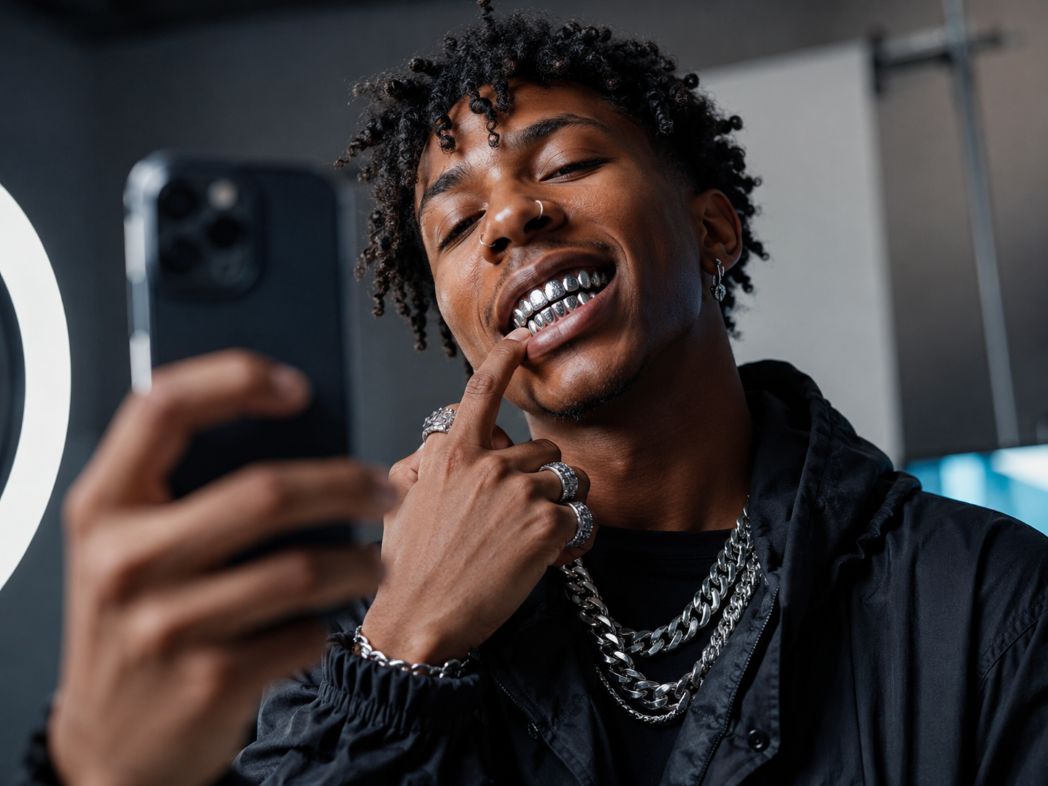
Short-form video platforms reward content that communicates an idea quickly. YouTube advises Shorts creators to capture attention almost immediately, while TikTok for Business says the first few seconds are especially important for keeping viewers engaged. For fashion creators, visually distinctive details work well because viewers can recognize them quickly.
That is one reason accessories such as silver teeth grillz can work well in close-up fashion content. Their shape, shine, tooth coverage, and finish can change the look of a face in a noticeable way. Rhino Grillz currently lists custom .925 sterling-silver options that include single caps, open-face designs, canine fangs, diamond-cut styles, and sets covering different numbers of teeth. The Federal Trade Commission explains that sterling silver contains 92.5 percent pure silver.
A Step-by-Step Guide to Building Stronger Visual Fashion Content
Strong short-form fashion content usually depends on one clear visual idea at a time. The steps below show how creators can use distinctive accessories to build attention, create contrast, and make each video easier to follow from the opening shot to the final reveal.
Step 1: Start With the Detail People Can Recognize Fast
A creator does not need to begin with a full outfit. Starting with the strongest visual detail can make the idea clear sooner. A close shot of jewelry, eyewear, nail art, or dental accessories can establish the theme before the full look appears.
This matches current short-form guidance. YouTube has highlighted the value of a strong opening in Shorts, and TikTok for Business recommends showing the key product or transformation early rather than using a long introduction. Let the accessory do some of the storytelling immediately.
Step 2: Use Outfit Transitions to Create a Visual Payoff
Transitions work because they create an obvious change. A creator might begin in a plain outfit, cover the lens, or move out of frame. The next shot reveals the completed styling with the accessory added.
Reflective metal, unusual shapes, contrasting textures, or a noticeable change around the face can make the transition easier to read on a small screen. YouTube has featured creators who use rapid transformations in Shorts, while TikTok for Business recommends before-and-after visuals as a way to create an immediate hook.
Step 3: Compare Styling Options Instead of Showing One Look
Comparison gives viewers a reason to keep watching by posing a simple question: which version works best? A creator could compare minimal with heavier styling, casual with formal clothing, or one design against another.
Dental jewelry shows how much one category can vary. Rhino Grillz lists open-face pieces that leave part of the tooth visible, solid caps, fang shapes, diamond-cut surfaces, and top or bottom sets with several coverage options. A short video can turn those differences into a simple visual sequence without requiring a long explanation.
Step 4: Show How the Piece Is Customized
Behind-the-scenes content adds process to the finished look. Creators can show sketches, material choices, measurements, fitting steps, packaging, or a final reveal.
Rhino Grillz says its custom-fitted designs use dental impressions from a mold kit before the finished piece is made. That process creates several possible scenes: opening the kit, preparing the impression, comparing design choices, and revealing the final fit. The result is a short visual story.
Step 5: Build Before-and-After Content Around Styling
A before-and-after format works best when the change is easy to see. The “before” might show a simple outfit. The “after” can add layered chains, rings, eyewear, metallic dental jewelry, or other details that shift the overall mood.
TikTok for Business recommends transformation-style openings because they communicate value quickly. For editorial fashion content, the goal does not need to be selling. The same format can compare aesthetics or show how one detail changes an outfit.
Why Unusual Accessories Can Become Storytelling Tools
Highly recognizable accessories can act like recurring visual markers. A creator might use the same sunglasses across different outfits, repeat a distinctive ring in transition videos, or return to a metallic smile detail as part of a recognizable style. Repetition can connect separate clips.
The audience still matters. TikTok for Business advises creators and advertisers to consider what resonates with the people they want to reach. Close-ups may suit jewelry-focused viewers, while outfit comparisons may appeal to people looking for styling ideas. Understanding how content, audience preferences, and platform strategy contribute to social media marketing success can also help creators decide which visual formats deserve more attention. The accessory should support the message rather than distract from it.
Visibility Is Different From Lasting Influence
Short-form platforms can make a fashion detail highly visible, but visibility alone does not prove that it will become a lasting trend. YouTube has noted that views do not automatically turn casual viewers into an enduring community. A dramatic accessory may perform well because it is surprising, photogenic, or easy to recognize, even if relatively few people adopt it in everyday life.
That is why visual accessories are most useful when creators treat them as storytelling devices rather than automatic trend signals. Close-ups, transitions, comparisons, customization footage, and before-and-after looks can make short videos easier to follow. The strongest content gives viewers something clear to notice, compare, or remember. Whether the accessory becomes part of a broader fashion movement is a separate question across a wider audience.